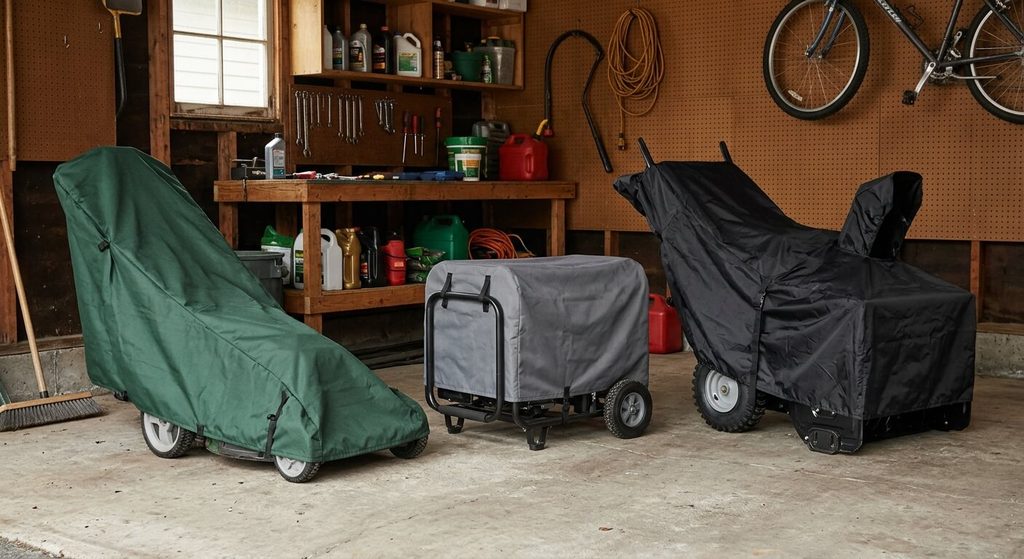
Outdoor power equipment takes a beating through every season. Between rain, snow, UV exposure, pollen, and rodent nesting, a lawn mower, portable generator, or snow blower sitting in the garage or shed can deteriorate faster than many owners expect. A purpose-built dust cover offers a simple line of defense, but outdoor equipment usually demands something different from the lightweight cotton covers used indoors.
Why Outdoor Equipment Needs Specialized Covers
Outdoor power equipment faces a combination of challenges that indoor electronics and furniture rarely see. Moisture can cause rust on metal decks and engine components. UV rays degrade plastic housings and fade decals over time. Dust and pollen work their way into air intakes, vents, and electrical connections. In winter, snow and ice buildup can gum up switches and chutes. Rodents and birds often see idle machines as shelter, leaving behind debris and chewed wiring.
A standard indoor dust cover may block some dust, but it often lacks the weight, water resistance, or UV protection needed for outdoor duty. Covers designed specifically for lawn mowers, generators, and snow blowers are typically constructed from heavier materials that can shed water, resist tearing in wind, and hold up against temperature swings.
Material Choices for Outdoor Use
When shopping for outdoor dust covers, material is the most important variable. The two main categories are vinyl-coated polyester and heavy-duty polyester or canvas blends.
Vinyl-coated polyester offers strong water resistance and is easy to wipe clean. It works well for equipment stored in damp garages or under carports. The downside is that it is not very breathable; if moisture gets trapped underneath, condensation can still cause rust. This makes it a better choice for dry storage than for long-term outdoor exposure where temperature changes create sweating. For a deeper look at material tradeoffs, see our guide to vinyl dust covers.
Heavy-duty polyester or canvas blends provide a middle ground. They resist water well enough for typical garage and shed storage while allowing more airflow to reduce condensation. Many outdoor covers in this category include UV inhibitors to slow sun damage. For regions with harsh winters, a material rated for snow load is worth considering so the cover does not collapse or tear under accumulated weight.
Lawn Mowers: Protection Through the Off-Season
Lawn mowers sit unused for months at a time, making them one of the most common candidates for a dust cover. A riding mower or zero-turn mower has a large deck, exposed engine components, and often a seat that can crack or mildew without protection. A push mower has a smaller footprint but still needs coverage for the handle, wheels, and underside.
When choosing a dust cover for a lawn mower, look for a fitted design rather than a simple tarp-style throw. A cover with elastic edges or straps stays in place during windy days and prevents rodents from pulling it aside. The material should be thick enough to resist punctures from sharp edges on the deck, but not so heavy that it becomes difficult to remove each time the mower is needed.
Battery-powered mowers require slightly different care. The battery compartment should stay dry, so a fully waterproof cover with taped seams can be a safer choice if the mower is stored in an area prone to leaks or flooding.
Portable Generators: Ventilation and Safety
Portable generators present a unique challenge. They need protection from dust and moisture, but they also require ventilation. A cover that wraps too tightly or blocks the exhaust and cooling vents can create a safety hazard.
Dust covers designed for generators often have a raised or tent-like structure that allows air to circulate while still shielding the control panel, outlets, and engine from direct exposure. Many include openings or elastic closures that fit around the handle, wheel kit, and propane connection without sealing the engine compartment.
Fuel safety is another consideration. If a generator is stored with fuel in the tank, condensation inside the tank becomes a greater risk. A breathable cover helps reduce trapped moisture, but the best practice remains to drain the fuel or use a stabilizer before long-term storage.
Snow Blowers: Preparing for Winter Storage
Snow blowers face the opposite extreme of lawn mowers. After the snow melts, these machines sit through humid summer months when mildew and rust become serious threats. A snow blower cover needs to protect the chute, auger, engine, and drive system without trapping moisture against painted surfaces.
Because snow blowers are often stored in garages with other sharp tools, tear resistance matters. A reinforced polyester cover with double-stitched seams holds up better than a lightweight cover when brushes against shovels or ladders. Some snow blower covers also include drawstring closures that cinch tightly around the base, which helps keep pests out during the months when the machine is idle.
Sizing and Fit Tips for Awkward Shapes
Outdoor power equipment is rarely a simple rectangular shape. A riding mower has a high seat and large wheels. A generator has a handle and protruding outlets. A snow blower has a long chute and wide auger housing. A cover that is too small will tear or leave critical sections exposed. A cover that is too large can act like a sail in a breeze, eventually rubbing against the equipment or collapsing under its own weight.
Measure the length, width, and height of the equipment before buying. Pay attention to mirrors, handles, and fuel caps that add extra width. Some manufacturers list specific model compatibility, which can simplify the process, but measuring directly is more reliable when the exact model is not listed. For guidance on getting the fit right, see our tips on custom-fit dust covers.
Maintenance and Seasonal Rotation
Dust covers for outdoor equipment need periodic attention themselves. At the start of each season, inspect the cover for mildew, tears, or stiffening from UV exposure. A quick brush-off and airing out can extend its life significantly. If the cover is machine-washable, follow the manufacturer’s directions; harsh detergents or high heat can break down water-resistant coatings.
Rotating covers by season is also practical. Some owners use a breathable polyester cover during humid months and switch to a vinyl-coated cover during heavy rain or snow seasons. This approach adds cost but gives better protection when conditions change.
Final Thoughts
Outdoor power equipment represents a significant investment, and a good dust cover is one of the least expensive ways to extend its usable life. The right cover depends on the climate, storage environment, and how often the equipment is used. For most garages and sheds, a heavy-duty polyester cover with UV protection and elastic strapping offers the best balance of water resistance, breathability, and durability. For unheated barns or outdoor storage, a thicker vinyl-coated option with sealed seams may be worth the extra cost.
By choosing a cover sized correctly for each machine and checking it regularly, owners can reduce rust, keep pests out, and start the season with equipment that is ready to run instead of recovering from months of neglect.
The written content on this page was generated with the assistance of AI.
